
¿QUÉ ESTÁS BUSCANDO?
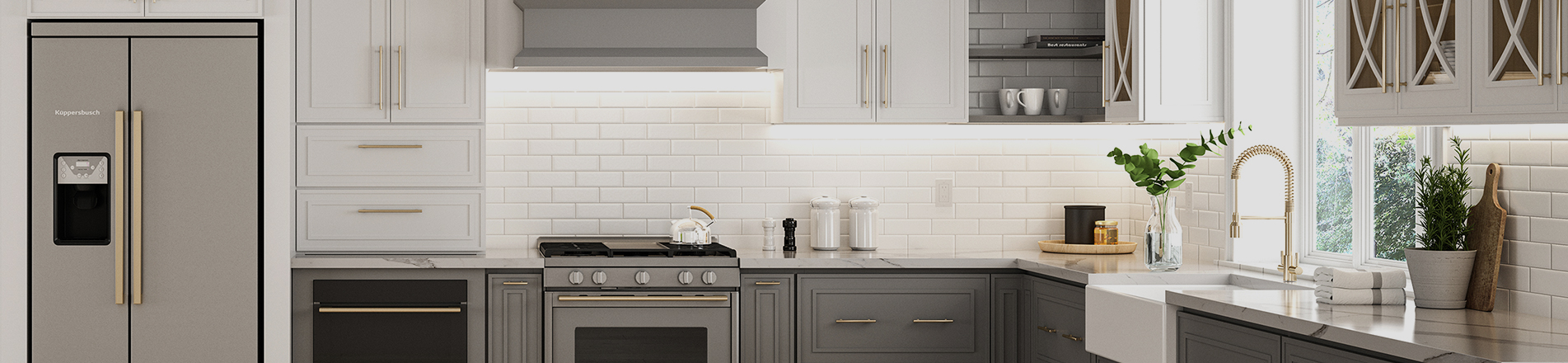
Many people are gradually leaning toward minimalist, clutter-free kitchens, and flat panel cabinetry perfectly caters to modern homeowners’ demands. Flat panel cabinets boast a sleek, timeless appearance and are incredibly easy to maintain. But the question remains: do flat panel cabinets have to be made of solid wood?
In truth, there is a common misconception that premium-looking, refined flat panel cabinets can only be crafted from solid wood. The reality is crystal clear: this is entirely untrue. Solid wood is merely one high-end material option for flat panel cabinets. Engineered wood panels work equally well as cabinet substrates, some even outperforming solid wood in certain properties, while offering better cost performance and simpler day-to-day upkeep.
What Are Flat Panel Cabinets?
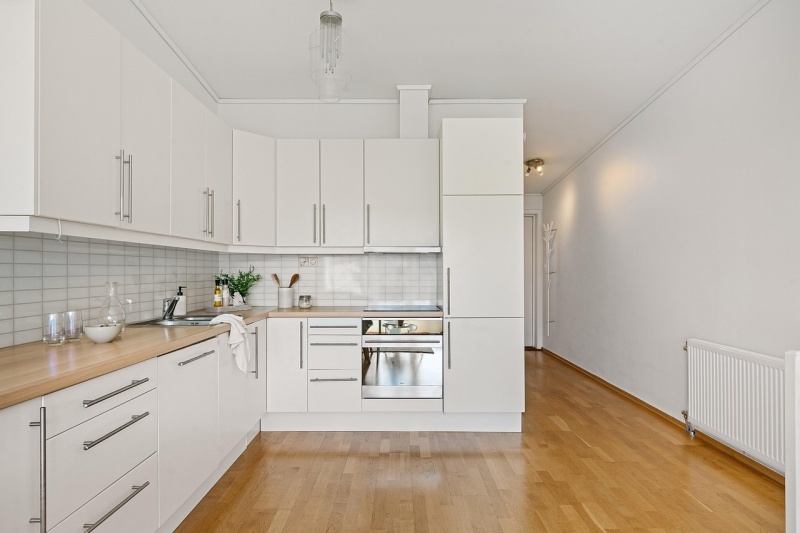
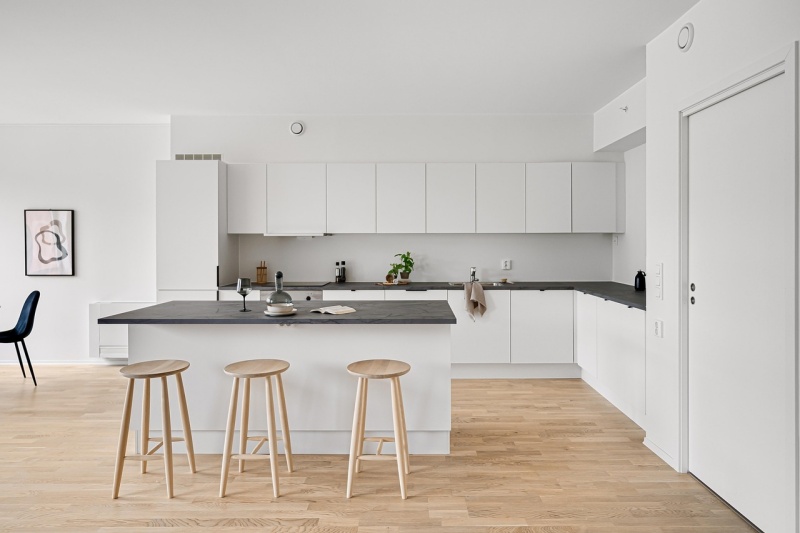
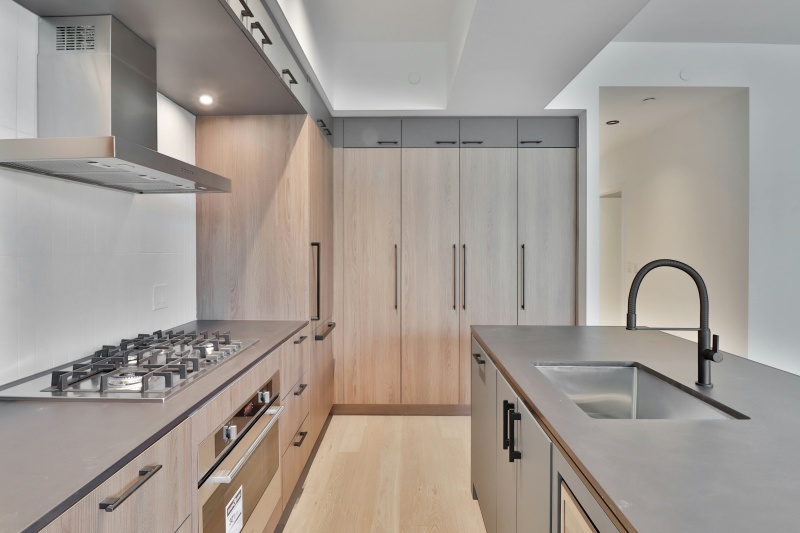
Flat panel cabinets are defined by their structural profile rather than their manufacturing material—there is no rule mandating solid wood construction for a cabinet to qualify as flat panel. Their design stands apart from raised-panel cabinetry and framed recessed Shaker-style cabinets. The defining feature of flat panel cabinets is a perfectly smooth, flush surface free of extraneous ornamentation or carved detailing, delivering a crisp, streamlined visual aesthetic.
Their seamless, untextured surfaces create an open, cohesive spatial feel, making them ideal for compact homes and open-concept kitchens alike. Popular substrate materials include MDF, plywood, solid wood and particleboard. With diverse surface finishing treatments, they can achieve high-gloss, matte, wood-grain and solid-color finishes to complement virtually any kitchen interior design style.
Pros & Cons of Flat Panel Cabinets
Their smooth, unbroken surfaces eliminate hard-to-reach crevices, preventing buildup of grease and dust and simplifying routine cleaning—perfect for heavily used kitchen spaces. Additionally, their minimalist, contemporary design resists aesthetic obsolescence. The manufacturing process is relatively straightforward, resulting in strong value for money.
They lack dimensional depth and layered texture, making them a poor match for ornate design styles such as French country kitchens that rely on carvings and mouldings for grandeur. Flat-panel RTA frameless kitchen cabinets demand extremely precise dimensional measurements, and installation is comparatively complex, requiring skilled professionals for accurate fitting.
Why Do People Assume Flat Panel Cabinets Must Be Solid Wood?
This misconception stems from long-standing stereotypes within the cabinetry industry. For decades, solid wood served as the core material for high-end custom cabinetry, earning a reputation as the gold standard thanks to its durability and organic texture. As a result, many homeowners operate under the assumption that “premium cabinets equal solid wood cabinets.” They believe flat panels must use solid wood for sturdiness and longevity, while viewing all engineered wood alternatives as cheap and flimsy.
Many also hold the belief that solid wood flat panels feature one-of-a-kind natural wood grain and are far easier to repair or refinish over time, cementing their status as the top choice for luxury kitchens. However, advances in modern engineered wood manufacturing have allowed man-made panels to match solid wood across most performance metrics, while delivering an even flatter, smoother finished surface.
Breakdown of Available Materials for Flat Panel Cabinets
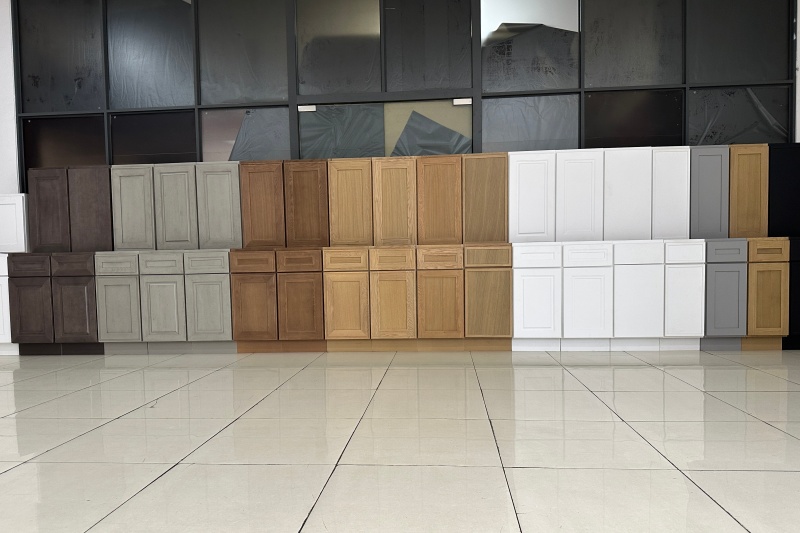
Flat panel cabinets support a wide spectrum of substrate materials, covering budget-friendly basic options, mid-range cost-effective picks and high-end luxury selections. Homeowners can easily source panels tailored to their specific needs without being limited to solid wood to achieve a satisfying result.
1. Solid Wood (High-End Premium Material)
Solid wood is the luxury custom substrate for flat panel cabinets, with common varieties including maple, white oak, cherry and walnut, predominantly specified for high-end residential custom renovations.
Advantages of Solid Wood Flat Panel Cabinets
Disadvantages of Solid Wood Flat Panel Cabinets
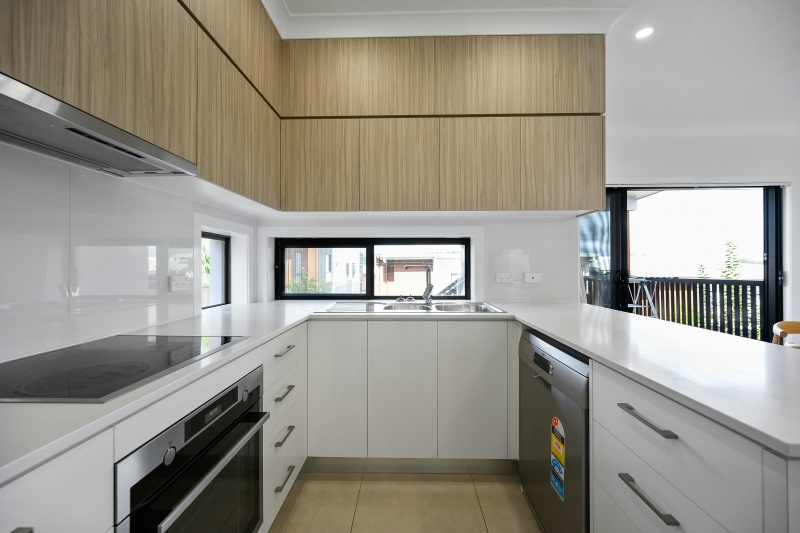
2. MDF (Mid-Range Best-Selling Material)
Medium-density fiberboard (MDF) is the most widely used substrate for modern European-style frameless flat-panel kitchen cabinets. As an engineered wood product, it is manufactured by compressing fine wood fibers with resin adhesives under high heat and pressure, yielding an ultra-smooth, uniformly consistent panel surface.
Advantages of MDF Flat Panel Cabinets
Disadvantages of MDF Flat Panel Cabinets
MDF flat panel doors and cabinet boxes require rigorous edge sealing. Poor edge sealing renders the material vulnerable to moisture-induced warping in humid kitchen environments. Unlike solid wood, severely damaged MDF cannot be sanded down and refinished for restoration.
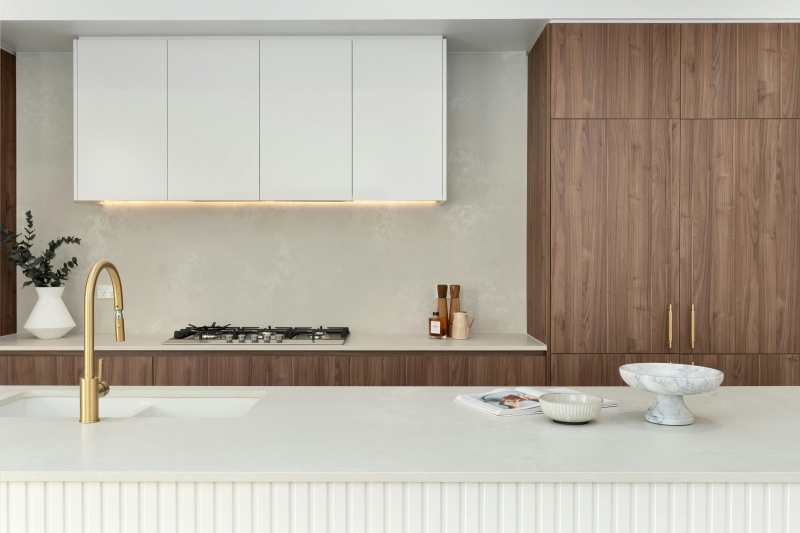
3. Plywood (High-Quality Material with Excellent Cost Performance)
Plywood is manufactured by gluing multiple thin wood veneers crosswise. Its surface can be overlaid with solid wood veneers, combining the structural stability of engineered wood panels and the aesthetic appeal of solid wood, making it the top choice for high-quality flat-panel cabinets.
Advantages of Plywood Flat-Panel Cabinets
Disadvantages of Plywood Flat-Panel Cabinets
Its surface smoothness is inferior to that of MDF, and it requires regular maintenance. Poor edge sealing craftsmanship or prolonged exposure to damp conditions may lead to glue separation and delamination on panel edges, shortening its service lifespan.
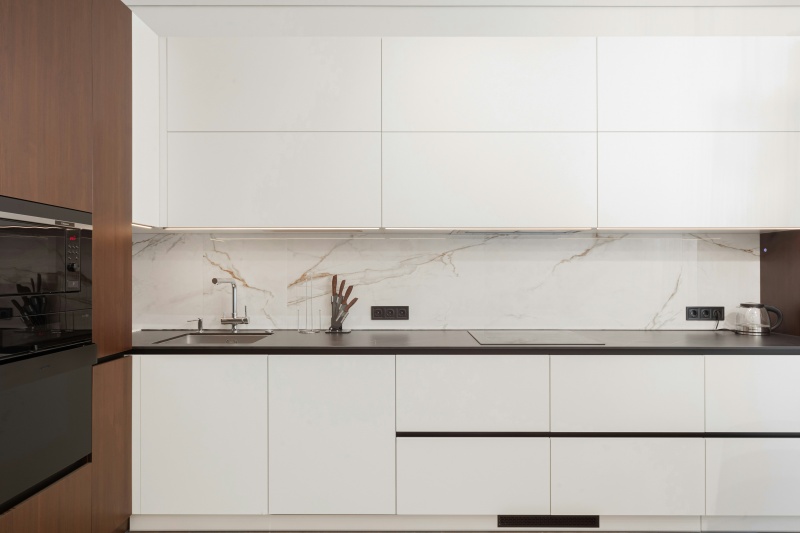
4. Particleboard (Budget-Friendly & Durable Material)
Particleboard flat-panel kitchen cabinets with melamine finishes serve as the base material for cabinetry. Their surfaces are bonded with simulated decorative layers under high temperature, replicating various textures including wood grain, solid colors and matte finishes. It is the most cost-effective material for flat-panel cabinets.
Advantages of Melamine Flat-Panel Cabinets
Disadvantages of Melamine Flat-Panel Cabinets
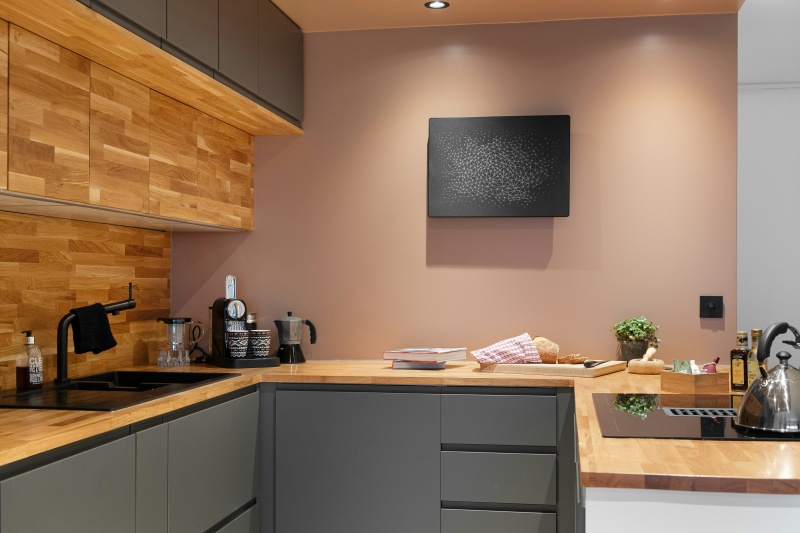
Performance Comparison: Solid Wood vs. Alternative Engineered Wood Panels
To facilitate intuitive material selection, we compare the core performance metrics of solid wood and alternative panels, clearly highlighting the strengths and weaknesses of each material.
| Material | Structural Stability | Natural Texture | Water & Stain Resistance | Price Level | Maintenance Difficulty |
| Solid Wood | Moderate | Highest | Average | Premium | Most Difficult |
| MDF | Moderately High | Ordinary | Relatively High | Medium | Moderate |
| Plywood | High | High | Relatively High | Medium-High | Quite Difficult |
| Particleboard (Melamine Board) | Extremely High | Ordinary | High | Lowest | Easiest |
Scenarios Where Solid Wood Flat-Panel Cabinets Are Recommended
While solid wood is not a mandatory option, it remains the optimal choice under the following circumstances:
Final Conclusion: Flat-Panel Cabinets Do Not Require Solid Wood
A flat-panel cabinet is defined by its stylistic design rather than its raw material. Its core merits — clean linear silhouettes, seamless flat surfaces and minimalist aesthetics — can be fully achieved using medium-density fiberboard, plywood, particleboard and other engineered panels. As a kitchen cabinet supplier, Union Woods supplies flat-panel cabinets crafted from all material types, delivering top-tier quality at wholesale prices.
Solid wood is merely an upscale upgrade option, not a necessity for manufacturing flat-panel cabinets. For most households, engineered wood panels offer better structural stability, simpler maintenance and higher cost performance while fully retaining the modern minimalist charm of flat-panel cabinetry. The quality of premium flat-panel cabinets never hinges on the use of solid wood; instead, it depends on whether the material aligns with your budget, space environment and living habits.


 Hoja informativa
 English
 IPv6 RED SOPORTADA