
¿QUÉ ESTÁS BUSCANDO?
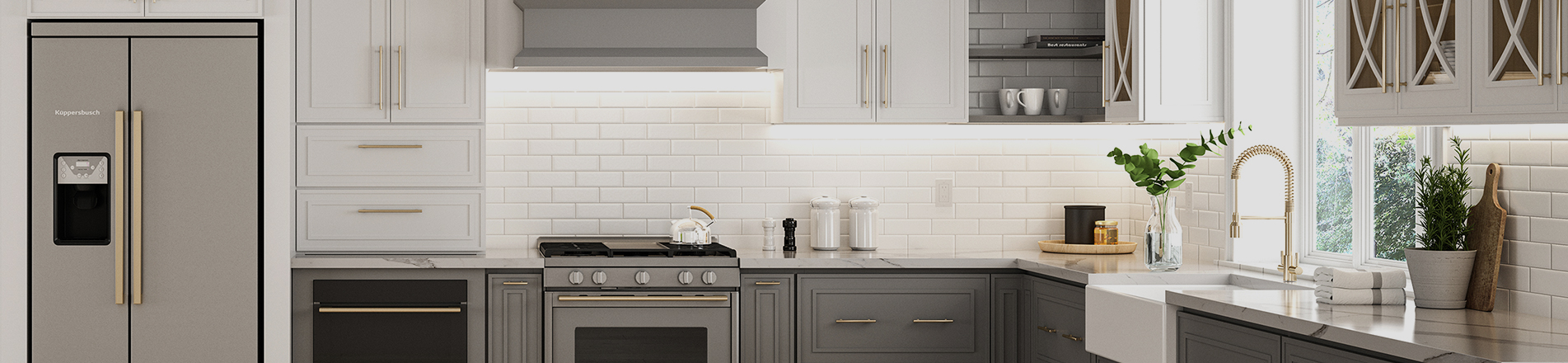
El roble es famoso por su veta distintiva, durabilidad y tonos cálidos, lo que lo convierte en una opción ideal para gabinetes de cocina y muebles. Sin embargo, su precio es tan elevado como su calidad. Esto lleva a muchos a preguntarse: ¿Qué madera se parece al roble pero es más económica? Buscan alternativas asequibles que conserven la apariencia icónica del roble.
Gracias a los avances modernos, varias maderas duras pueden procesarse cuidadosamente para imitar visualmente el roble, reduciendo así los costos. Además, los paneles de madera de ingeniería pueden imitar el roble mediante técnicas de chapado. Las maderas con tonalidades adaptables también pueden teñirse para replicar los tonos y vetas clásicas del roble. Por lo tanto, existen numerosos sustitutos viables del roble.
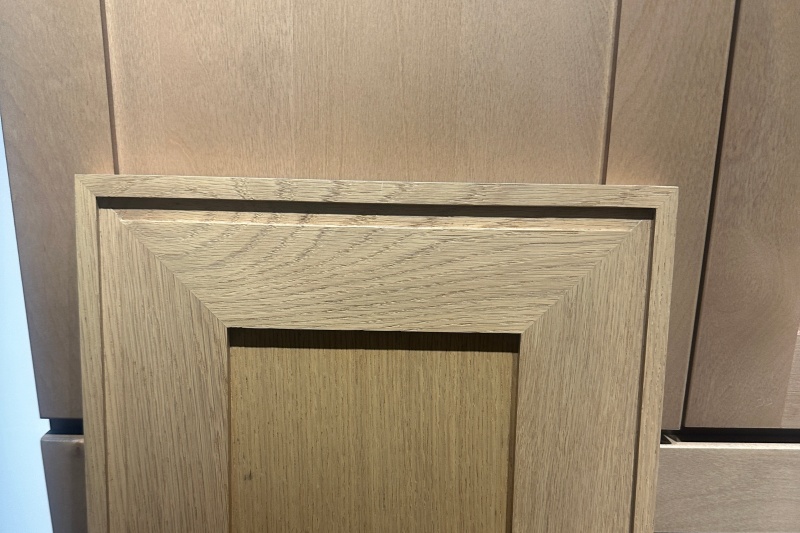
Criterios para evaluar los sustitutos del roble
Antes de explorar qué maderas se asemejan al roble, primero definimos las características clave del roble —y los rasgos específicos que deben imitar sus sustitutos— para ayudarle a evaluar las opciones adecuadas:
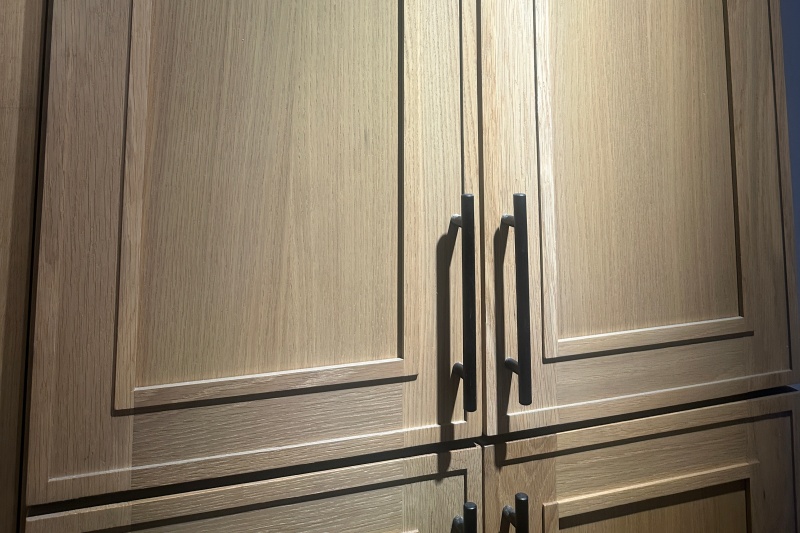
Madera de fresno: el sustituto de madera dura más parecido al roble.
Actualmente, el fresno es la madera dura que más se asemeja al roble en veta, textura y rendimiento práctico. Originario de Norteamérica y Europa, es más económico que el roble y es la opción preferida para proyectos personalizados de alta gama como alternativa a este.
Apariencia vs. Roble
La madera de fresno tiene un tono naturalmente pálido con una veta fina, compacta y fluida, muy similar a la textura del roble. Al igual que el roble, el fresno presenta sutiles radios medulares en las superficies de corte radial (aunque menos prominentes). Su veta clara y fina absorbe el tinte de manera uniforme, ya sea que se mantenga en su color natural o se tiña con los tonos blanco cremoso, madera natural o café oscuro del roble. El tono base cálido se integra a la perfección con los matices naturales del roble, produciendo un acabado de alta calidad sin manchas ni decoloración.
Durabilidad y facilidad de uso
La madera de fresno, duradera y resistente, tiene una dureza Janka de 1320 lbf, superior a la del roble rojo (1290 lbf) y ligeramente inferior a la del roble blanco (1360 lbf). Es robusta y ofrece una excelente resistencia a la flexión, lo que la hace ideal para gabinetes de cocina, muebles, pisos e incluso equipos deportivos (por ejemplo, bates de béisbol). El fresno se corta, lija y mecaniza con facilidad, y presenta una excepcional adherencia a tintes y pinturas. El teñido profesional permite replicar con precisión el color y la veta del roble rojo y blanco.
Comparación de precios
Elegir fresno en lugar de roble blanco supone un ahorro del 30 al 50 % en los costes, con mayores descuentos por compras al por mayor.
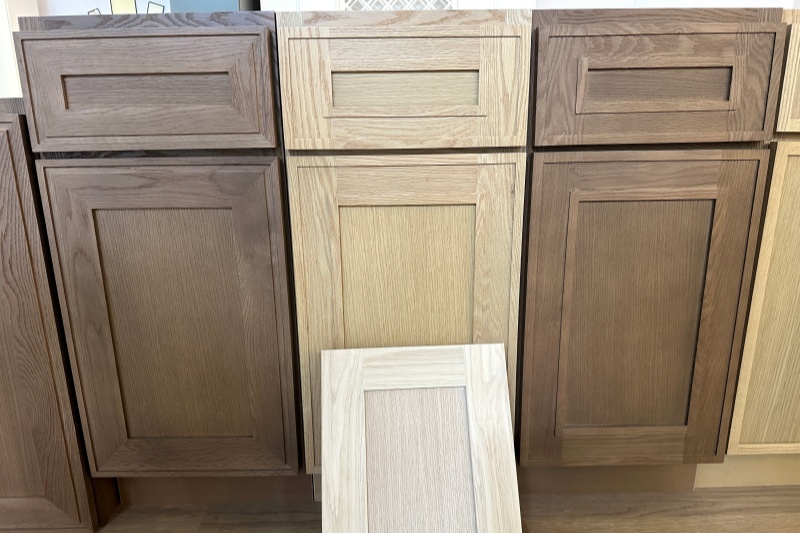
Arce blando: el "gemelo rubio" del roble blanco.
El arce blando es una madera dura de color crema pálido, veta fina y recta, y textura sutil, menos pronunciada que la del roble blanco. Al teñirlo o barnizarlo, se asemeja mucho al roble blanco, aunque carece de los característicos radios medulares de este último. Lo suficientemente resistente para muebles, gabinetes y molduras, el arce blando es fácil de trabajar, está ampliamente disponible en Norteamérica y es entre un 20 % y un 30 % más económico que el roble blanco, lo que lo convierte en una opción asequible con apariencia de roble.
Abedul: Un sustituto versátil de color claro
El abedul es una madera dura de tono dorado claro y veta fina, recta y uniforme (más consistente que la del roble). Carece de los radios medulares del roble, pero se puede teñir para imitar la fina textura del roble blanco. Su veta compacta y lisa es ideal para proyectos que requieren un aspecto limpio y moderno: una alternativa versátil al roble blanco.
El abedul tiene una dureza Janka de 1260 lbf, muy cercana a la del roble rojo (1290 lbf) y ligeramente inferior a la del roble blanco (1360 lbf). Duradero y resistente a los arañazos, es ideal para muebles y armarios. Su excelente trabajabilidad garantiza cortes limpios, un lijado suave y una fuerte adherencia de tintes y pinturas, lo que lo hace fiable para proyectos al por mayor. El abedul es fácil de conseguir y entre un 25 % y un 35 % más barato que el roble blanco. Union Wood lo suministra. Gabinetes de cocina de madera con apariencia de roble a menor costo Como una alternativa asequible a los gabinetes de roble blanco, ofrecemos precios competitivos como mayorista de gabinetes con sede en Vietnam.
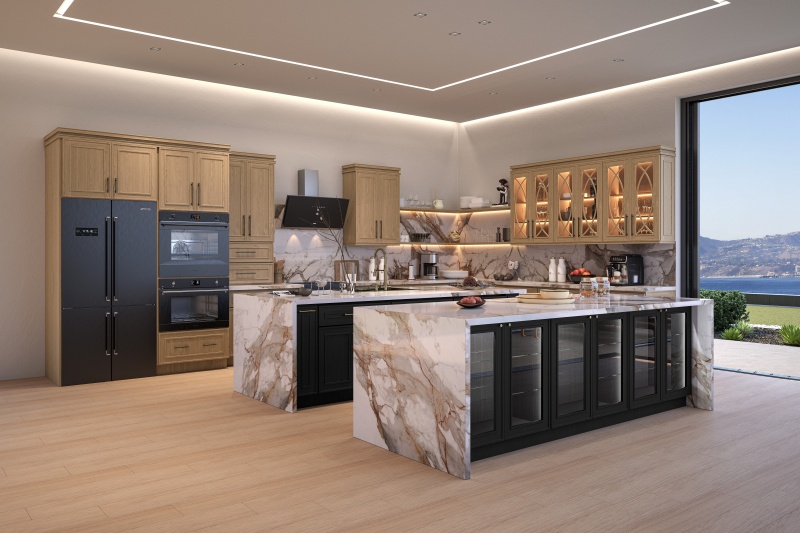
Álamo: El "caballo de batalla" económico
El álamo tiene una veta recta y uniforme, una textura consistente y una densidad moderada, siendo uno de los sustitutos más económicos del roble (hasta un 50 % más barato). Ofrece una excelente adherencia a la pintura y al pegamento, lo que lo convierte en una madera dura rentable y de uso común para proyectos de personalización integral del hogar y estructuras de armarios. Con una dureza que es aproximadamente la mitad de la del roble, el álamo es uno de los árboles de hoja caduca de crecimiento más rápido de Europa, alcanzando la madurez en 10 a 20 años. Al ser una madera sostenible y respetuosa con el medio ambiente, también secuestra carbono eficazmente durante su crecimiento, contribuyendo a la reducción de emisiones.
Si bien su aspecto natural difiere significativamente del roble, la veta recta y fina del álamo lo convierte en una base excelente para el teñido. Mediante el enchapado, puede imitar el patrón de veta y el tono del roble (aunque con menos convicción que los sustitutos de alta calidad). Ligero y fácil de mecanizar, el álamo reduce los costos de transporte, instalación y procesamiento. Su abundante suministro, obtenido de forma sostenible, evita la escasez y el alto precio del roble, lo que lo hace ideal para marcos de gabinetes y bases de puertas como alternativa a este.
Madera de ingeniería: Contrachapado
Si busca opciones económicas con apariencia de roble, el contrachapado de ingeniería es una excelente alternativa. A diferencia de los sustitutos de la madera dura natural, el contrachapado es un material sintético que ofrece un rendimiento excepcional. Mediante el proceso de enchapado, la chapa de roble se adhiere directamente a un núcleo de contrachapado, logrando una apariencia idéntica a la del roble macizo.
La chapa de roble es madera ultrafina cortada a partir de troncos naturales, generalmente adherida a núcleos compuestos estables como el contrachapado, el aglomerado o el MDF. El contrachapado es el preferido para imitar el rendimiento del roble. Más asequibles que la madera maciza, los núcleos compuestos también ofrecen mayor estabilidad, solucionando los problemas de expansión, contracción y agrietamiento de la madera maciza. Por estas razones, nuestros gabinetes de cocina de contrachapado desmontables, disponibles directamente de fábrica, son muy populares.
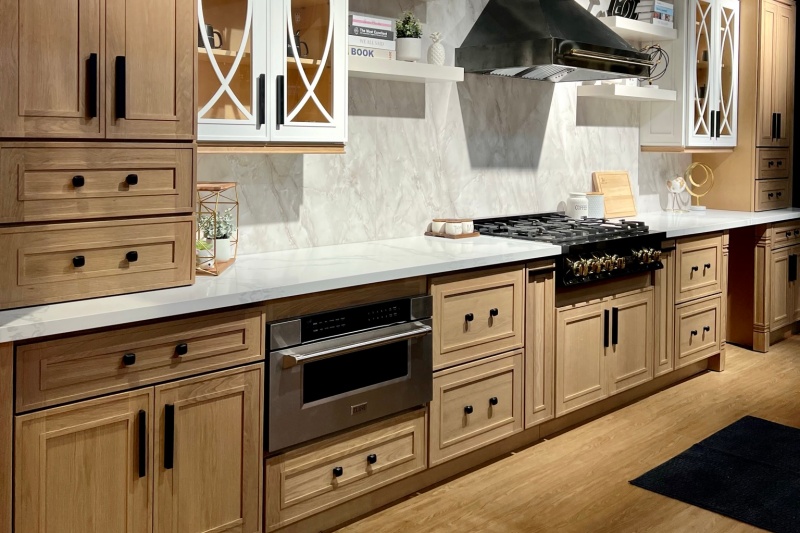
Consejos para que la madera se parezca más al roble.
Incluso las maderas que se asemejan naturalmente al roble requieren un acabado profesional para obtener resultados óptimos. Aprovechando años de experiencia en producción, nuestra fábrica en Vietnam logra una réplica excepcional del roble con estos pasos clave:
Veredicto final: ¿Qué tipo de madera es la adecuada para usted?
La mejor madera con apariencia de roble depende de tu proyecto, presupuesto y la estética deseada:
La popularidad del roble es bien merecida, pero no es la única madera con un aspecto clásico y atemporal. Cualquiera de estas alternativas le permite ahorrar costos sin comprometer el estilo ni la calidad. Ya sea para fabricar mesas de comedor, instalar gabinetes o agregar molduras decorativas, estas maderas equilibran la estética del roble con la asequibilidad. Para proyectos de alto presupuesto, los gabinetes de roble siguen siendo recomendables. Ofrecemos gabinetes de cocina Shaker delgados de roble, gabinetes de cocina Shaker de roble, Armarios de cocina de roble con marco doble estilo Shaker pintado., Muebles de cocina de estilo roble con paneles empotrados a precios directos de fábrica.


 Hoja informativa
 English
 IPv6 RED SOPORTADA