
¿QUÉ ESTÁS BUSCANDO?
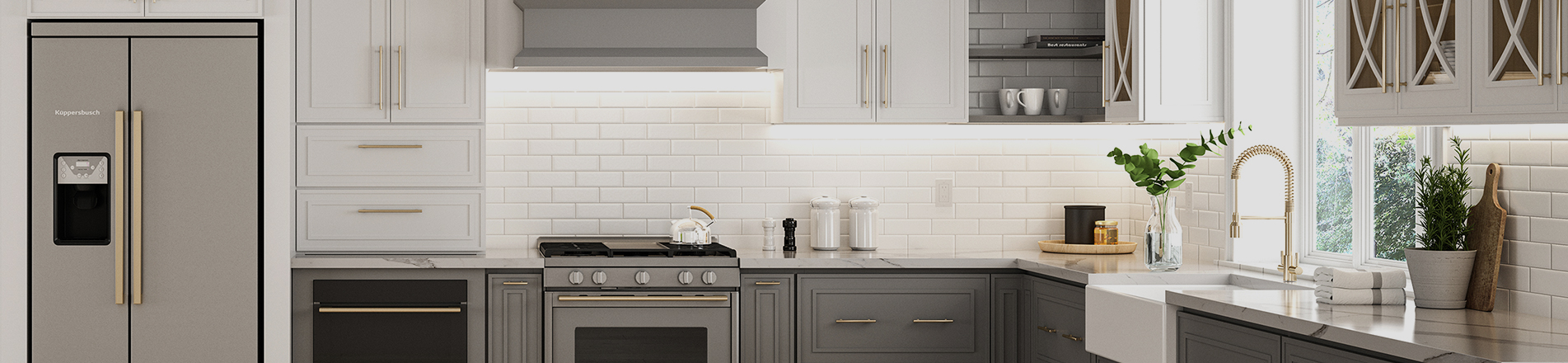
When you want your dream kitchen to stand out, move beyond ordinary kitchen designs and try two‑tone kitchen cabinets. They deliver richer visual effects, establish spatial order, and give your kitchen one‑of‑a‑kind character.
Two‑tone kitchen cabinetry is not simply splicing two colors together. To build a stunning yet fool‑proof dream kitchen that balances beauty, practicality and spatial perception, you must strictly follow color theory, spatial optics and functional‑design logic. Whites, grays, blacks and low‑saturation hues work exceptionally well for two‑tone kitchen cabinets. It is recommended to place lighter shades on upper cabinets to keep the kitchen bright and spacious while avoiding a top‑heavy visual effect.
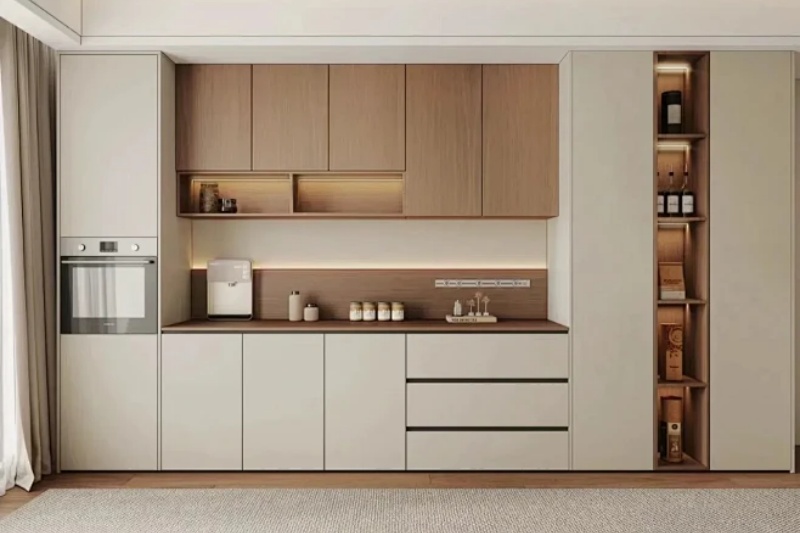
Three Core Principles for Two‑Tone Cabinet Color Matching
Before exploring what colors are good for two‑tone kitchen cabinets, master these three color‑matching principles. They separate random color combinations from high‑end custom designs and directly determine the overall texture and comfort level of your kitchen, making them essential guidelines.
1. Clear Primary‑Secondary Relationship & Color Proportion
Two‑tone kitchen cabinets require a distinct “primary color” and “accent color”. The primary color occupies the larger area (roughly 60‑70 %, typically for base cabinets or the overall backdrop). The accent color accounts for 30‑40 %, mostly for wall cabinets or partial accents. This prevents the disjointed look caused by an equal 50‑50 split and preserves visual order.
2. Light‑Dark Contrast & Layered Depth
Intersperse light and dark tones. Avoid all‑light or all‑dark schemes, which can feel just as monotonous as single‑color cabinetry. Use light‑dark contrast to define spatial dimensions and follow the rule: light above, dark below. Choose light‑toned wall cabinets paired with dark or wood‑tone base cabinets to follow the visually stable “light top, heavy bottom” logic. Alternatives include light walls with dark cabinetry or large‑area light tones offset by localized dark accents, which effectively prevent a cramped feeling.
3. Harmonious & Cohesive Color Palette
Cabinet colors should coordinate with kitchen wall and floor tiles to maintain tonal continuity across the space. Within this framework, your two‑tone cabinets should sit within the same color family or feature clear warm‑cool complementary relationships with smooth brightness transitions. Avoid clashing hues and haphazard mixing, otherwise the whole kitchen aesthetic will suffer.
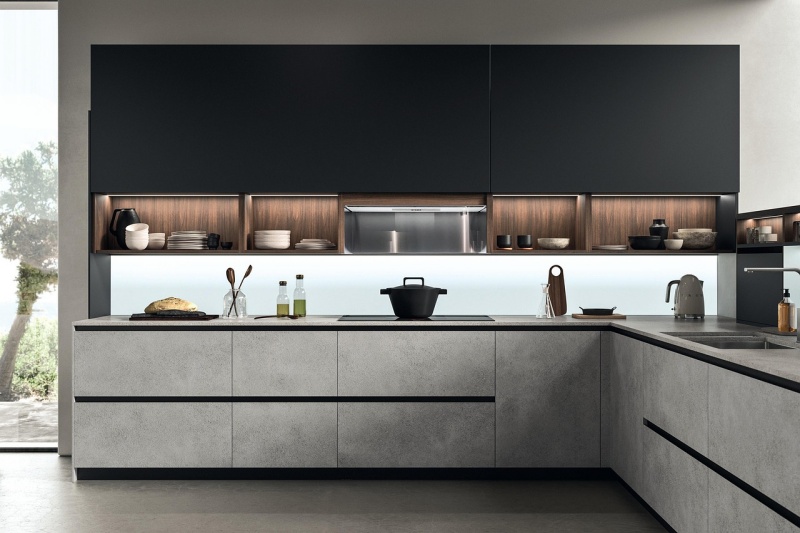
Well‑Received Two‑Tone Kitchen Cabinet Color Schemes
The key to two‑tone cabinet styling lies in balancing layered depth and overall harmony. Drawing on international home‑design trends, color psychology and spatial adaptability, below are popular two‑tone kitchen concepts covering modern, natural and light‑luxury styles to fit diverse interior‑design requirements.
1. Classic Neutral Combination: Warm White Wall Cabinets + Natural Wood‑Tone Base Cabinets
This is the most forgiving, timeless two‑tone cabinet solution and a mainstream pick for transitional, cottage and modern‑minimalist kitchens. Wall cabinets in warm cream‑white or soft ivory‑white (avoid harsh cold stark white) reflect light well, brightening kitchens in small‑to‑midsize homes and expanding perceived space. Pair base cabinets with natural wood tones such as light oak, teak or maple to retain authentic wood grain and a warm tactile quality.
Design Logic: White is highly inclusive, while wood brings innate natural warmth. Warm white combined with wood offsets the coldness of all‑white cabinetry and avoids the heaviness of full‑wood kitchens, balancing brightness and coziness. From a color‑psychology perspective, wood tones ease visual fatigue, and warm white fosters a clean, neat kitchen atmosphere.
Best For: Small‑to‑midsize kitchens, kitchens with limited natural light, and families prioritizing a welcoming feel. Works best with wood flooring, white quartz countertops, and brass or silver hardware.
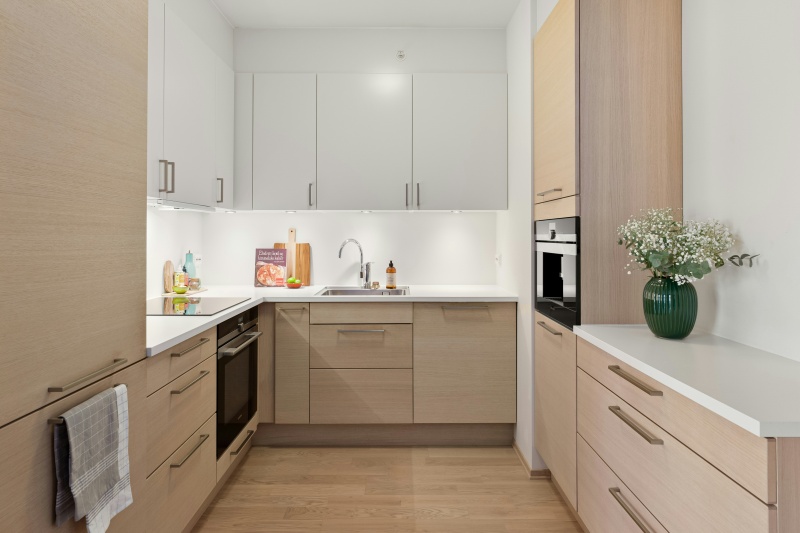
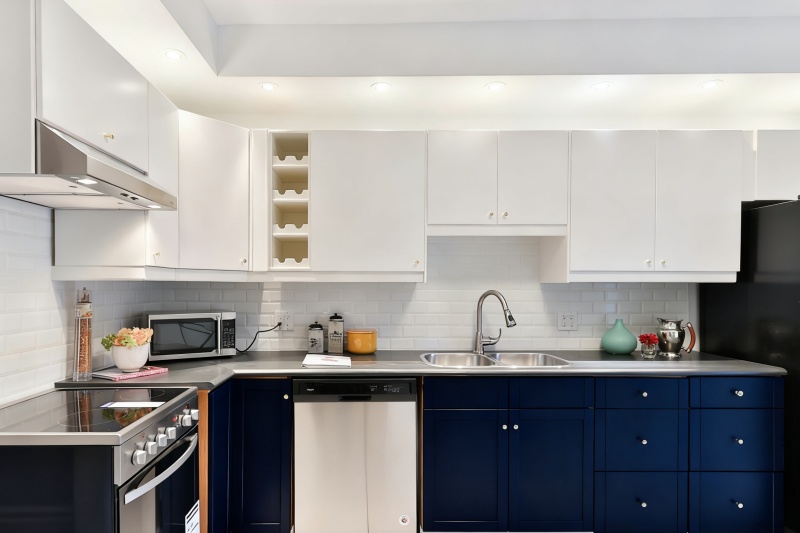
2. Light‑Luxury Premium Combination: Pure White Wall Cabinets + Navy Blue Base Cabinets
The “white‑on‑top, navy‑blue‑below” two‑tone kitchen is a timeless high‑end pairing. It moves past plain neutral palettes to infuse refined light‑luxury character without being overly bold, delivering a clean, fresh visual. High‑purity matte‑white wall cabinets preserve kitchen brightness; low‑saturation navy‑blue base cabinets offer grounded tone with perfectly moderated visual presence.
Design Logic: Navy blue is a low‑brightness, high‑quality color that creates moderate yet effective contrast against pure white. It visually anchors the lower kitchen zone and amplifies layering, while also being highly stain‑resistant — ideal for base cabinets. It perfectly follows the “light above, dark below” principle. Blue also softens the greasy visual impression caused by cooking fumes and builds a fresh spatial mood.
Best For: Mid‑to‑large kitchens with ample natural light; modern light‑luxury, Scandinavian and coastal‑style interiors. Matches white marble countertops, tiled flooring, and matte‑black or brass hardware.
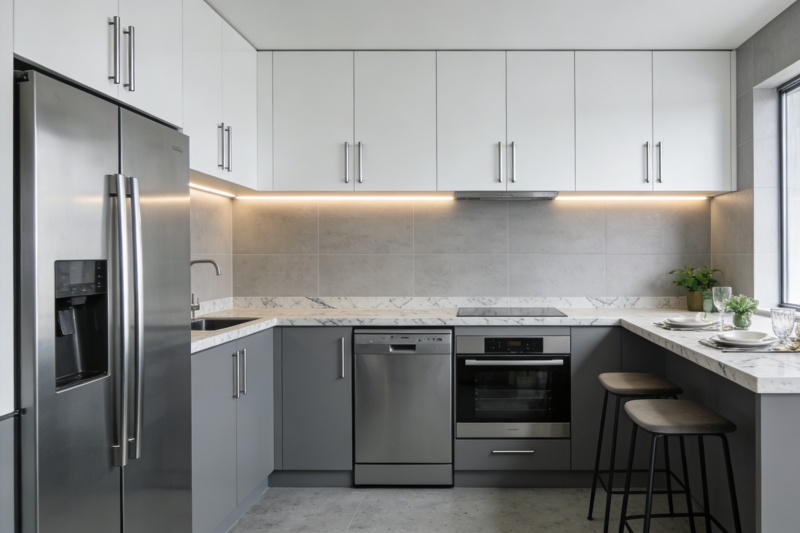
3. Soft Modern Combination: Cool White Wall Cabinets + Grey Base Cabinets
Grey is a designer‑favored neutral tone sitting between white and black, combining merits of both. Two‑tone grey and white frameless kitchen cabinets create an understated yet sophisticated look, making this a gentle modern‑style solution.
Design Logic: White boosts upper‑zone lighting and airiness, while grey base cabinets provide visual anchoring plus practical stain resistance. Brightness differences build layers, and neutral hues achieve a soft modern aesthetic. In color psychology, grey generates a calm, orderly atmosphere well‑suited for high‑frequency cooking spaces.
Best For: All home sizes, especially high‑rise kitchens with abundant daylight; modern minimalist, industrial‑luxury and muted‑style interiors. Pair with grey quartz countertops, durable floor tiles, and stainless‑steel hardware.
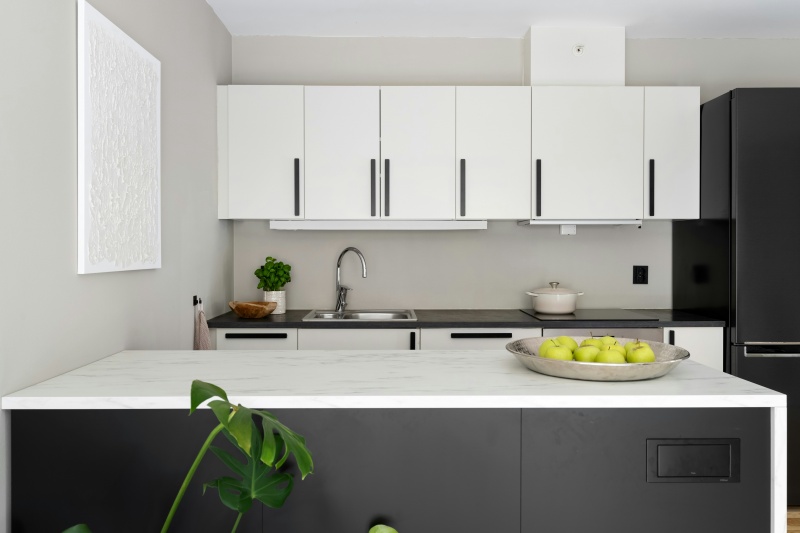
4. Bold Contrast Combination: White Wall Cabinets + Black Base Cabinets
Black‑and‑white contrast never goes out of style. Black and white American style framed kitchen cabinets deliver strong visual impact for a distinctly contemporary kitchen. Crisp white wall cabinets keep the space open and luminous; matte‑black base cabinets generate dramatic contrast with powerful design appeal.
Design Logic: Black and white represent the ultimate achromatic contrast with strong visual tension and clear spatial layering. Matte black resists stains and scratches, perfectly fitting the grease‑prone work zone of base cabinets. White wall cabinets counterbalance black’s visual weight to prevent the oppressive feel of large‑scale black surfaces, yielding a highly modern kitchen.
Best For: Large kitchens with plenty of natural light; modern minimalist, post‑modern and light‑industrial styles. Combine with white quartz countertops, solid‑color wall tiles, and silver metallic hardware.
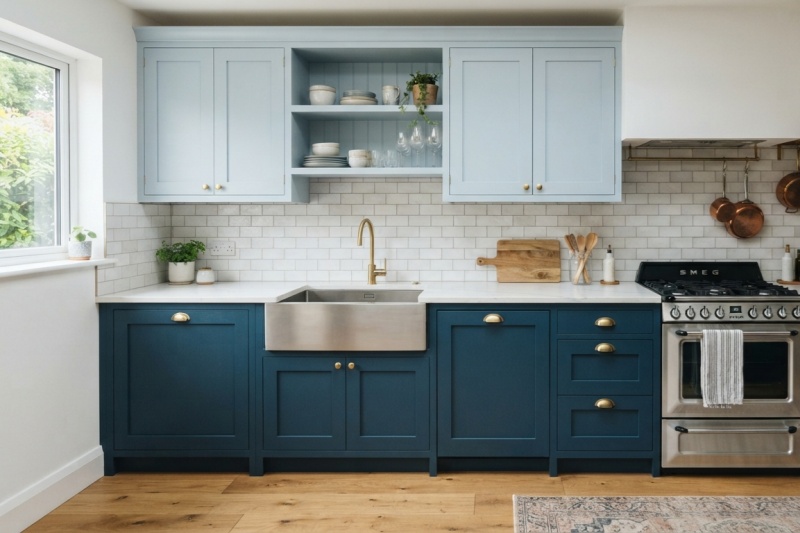
5. Fresh Natural Combination: Light‑Blue Wall Cabinets + Deep‑Blue Base Cabinets
Monochromatic blue‑tone gradation offers a distinctive two‑tone approach different from cross‑color‑family bold contrasts. Wall and base cabinets use blue shades of varying brightness and saturation for unified overall tonality, rich layers and a fresh, natural ambiance.
Design Logic: Monochromatic gradation adheres to color‑harmony rules and carries very low design risk. Misty‑blue or pale‑sky‑blue wall cabinets lend an airy, breathable feel; lake‑blue or forest‑blue base cabinets ground the space and enrich visual depth. Blue tones relieve visual strain, mitigate the hot, greasy perception of kitchens, and infuse natural vitality.
Best For: Mid‑size kitchens for homeowners favoring fresh natural aesthetics; coastal and Scandinavian interiors. Match with light‑toned wood flooring, white countertops and white wall tiles.
Final Summary
To create perfect mixed-color wood kitchen cabinets with two tones, the core essentials are respecting spatial logic, honoring color harmony, and balancing beauty with practicality. Different color palettes bring entirely different spatial temperaments: classic warm white paired with natural wood creates a warm and versatile home atmosphere, white matched with navy blue or matte black presents a stylish light-luxury texture, gray two-tone combinations deliver low-key advanced aesthetics, and monochromatic blue gradients bring a fresh and natural kitchen vibe. You can choose the most suitable solution according to your preferred style, kitchen lighting and space conditions.
By strictly following the three major design rules—light uppers with dark lowers, unified color tones, and well-balanced proportions—you can easily avoid mismatched and tacky color combinations and achieve layered, high-end and long-lasting two-tone kitchen cabinets. If you still have not found your ideal two-tone kitchen scheme, reach out to Union Woods’ professional design team. Custom kitchen 3D renderings will help you intuitively visualize the charm of personalized two-tone kitchen cabinetry and create a tailored kitchen space.


 Hoja informativa
 English
 IPv6 RED SOPORTADA