
¿QUÉ ESTÁS BUSCANDO?
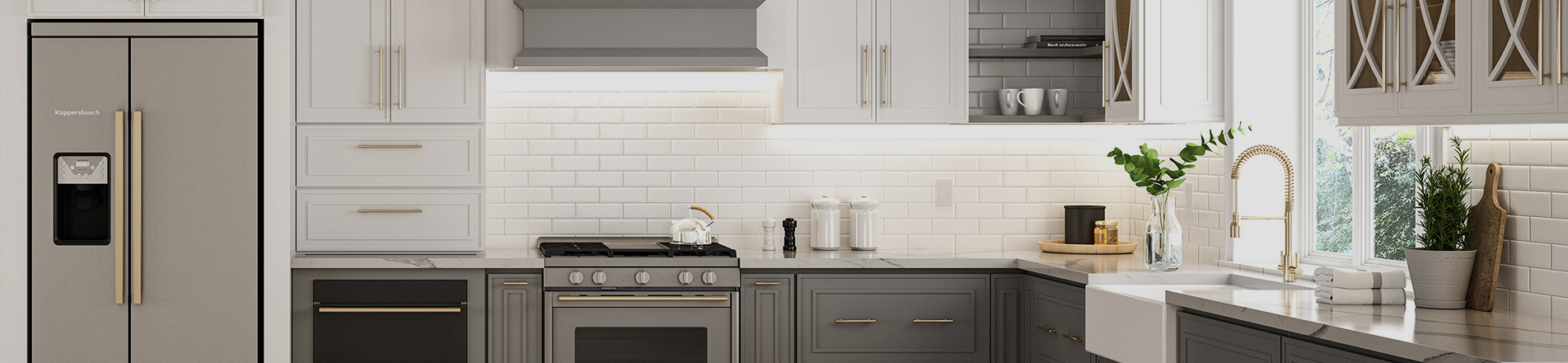
Picking the cabinet door style and finish is only half the job. The other half — equally critical to defining your kitchen’s aesthetic — is hardware finish. Do not overlook these small details. Though compact, hardware sits directly on wood cabinet doors and catches the eye every time a cabinet is opened. It serves as both a subtle accent and a core part of daily user experience.
For cabinets to feel refined, sophisticated and premium, hardware must be well-matched. A poor pairing between hardware finish and wood cabinetry can make the space feel disjointed, as if two conflicting design languages have been forced together. So, what color hardware looks best on wood cabinets?
Why Hardware Finish Matters
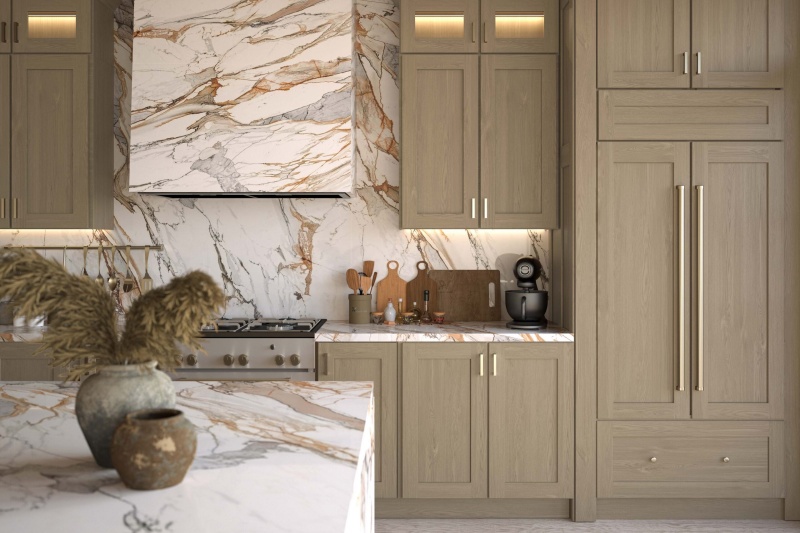
In a kitchen filled with warm wood tones, cabinet hardware is one of the few reflective, cool-textured components. Wood absorbs light and typically has a matte or satin finish, while metal reflects light. Its temperature — warm or cool — depends on its surface treatment. This contrast of light and shadow gives hardware visual definition. Without this contrast, wood-grain stained flat-panel kitchen cabinets can look flat and lack focal points.
Core Guiding Principles for Selection
1. Balance Warmth and Coolness: Warm-toned woods (honey oak, cherry, amber-stained maple) naturally pair with warm metals (brass, bronze). Cool-toned woods (ivory oak, black oak, silver-gray maple) work better with cool metals (chrome, brushed nickel, stainless steel).
2. Light and Shade Contrast: Hardware must have a clear value contrast against the wood cabinetry — either noticeably lighter or darker. When hardware and wood share similar brightness values, they visually blend together and create an unfinished, underwhelming look.
3. Consistent Styling: European flat-panel kitchen cabinets feature simple door profiles suited for slim, understated pulls. Traditional raised-panel doors have intricate detailing and require substantial, character-rich hardware. Both the color and shape of hardware need to align with the overall design style.
First, Classify the Tone of Your Wood Cabinets
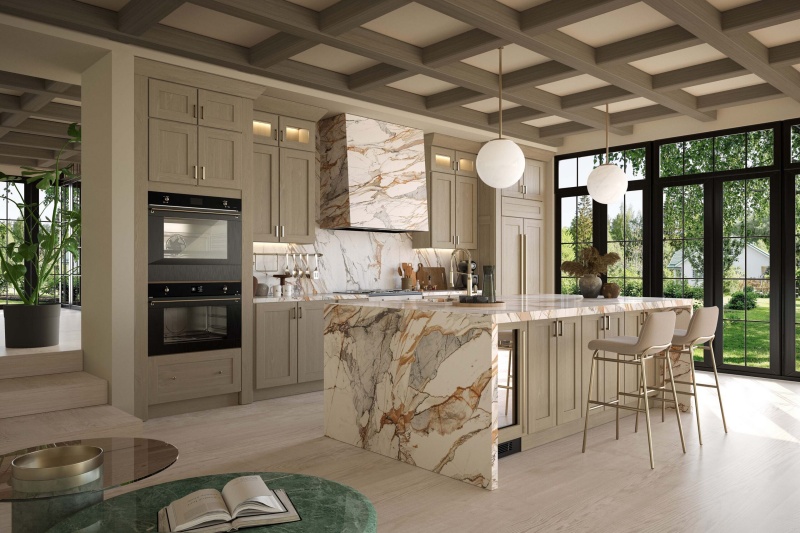
Before matching hardware to wood cabinetry, identify the wood’s tone. Most ready-to-assemble kitchen cabinets and custom wood cabinets sold in the North American market fall into four broad tone categories:
1. Light Natural Wood
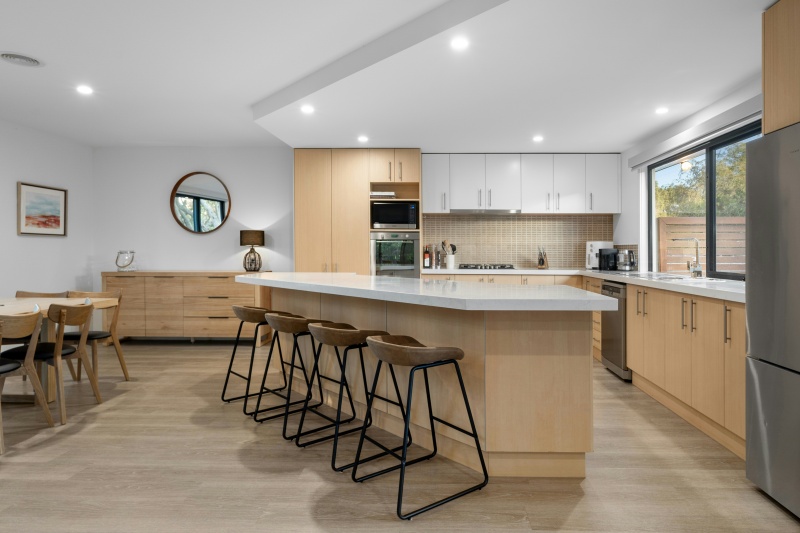
Common substrates include white oak, maple and birch, ranging from pale beige to light golden brown. The grain is open and clear, bouncing natural light to create a bright, airy kitchen. Low-saturation light wood tones are soft and easy on the eyes, building a fresh, calming kitchen atmosphere. Timeless and slow to trend out, they are a staple for Scandinavian and farmhouse kitchen designs.
2. Medium Warm-Toned Wood
Honey maple, rubberwood and oak carry golden-brown to reddish-brown hues. Their warm, natural grain softens the hard edges of a kitchen and delivers a cozy vibe. Retaining natural grain adds visual layers that solid flat doors lack. Highly versatile, these woods fit organic, Japanese and farmhouse kitchen styles.
3. Dark Wood
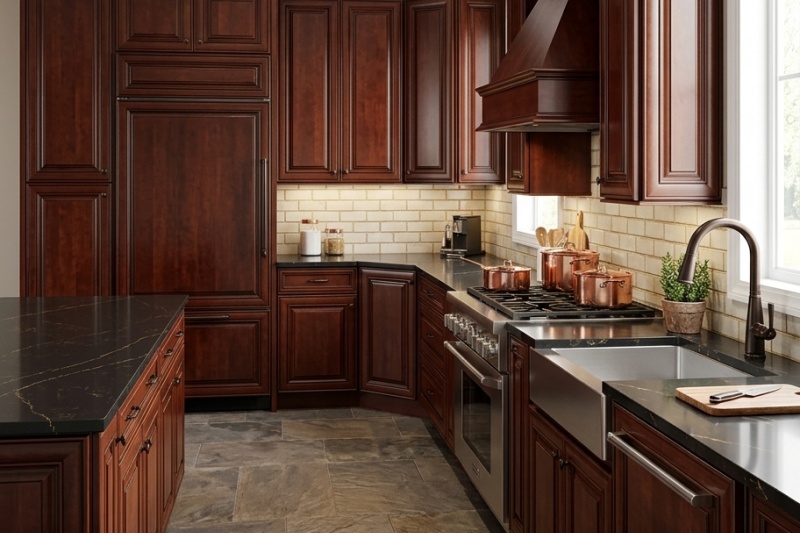
Centered around natural or deeply stained walnut, coffee oak, mocha maple and dark cherry. Dark wood carries a rich, luxurious and elegant feel. Visually contracting, it draws focus and lends the kitchen a grounded, clean presence. It fits beautifully with vintage, farmhouse and traditional American designs.
4. Gray-Washed / Silver-Toned Wood
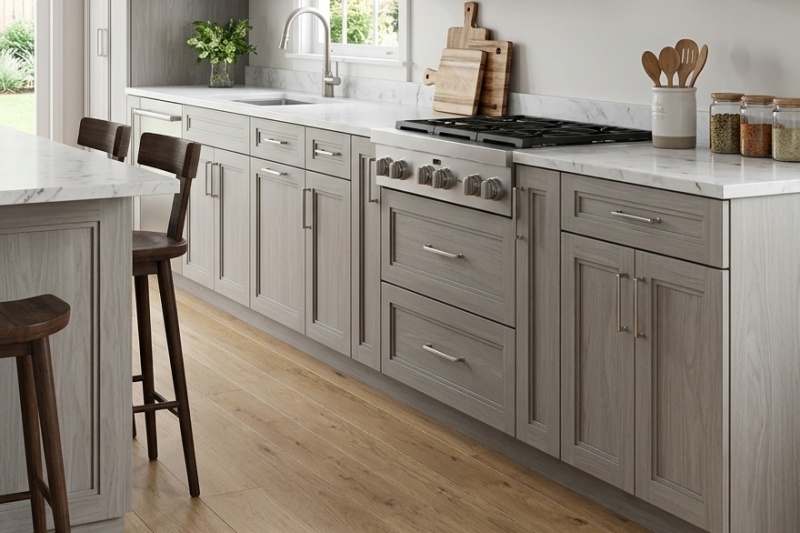
Gray-washed oak, silver-stained maple and gray-stained rubberwood are neutral cool tones with a crisp, upscale character that elevates modern and light luxury interiors. Understated yet sophisticated, silver-stained maple balances cool gray with the warmth of wood grain, ideal for modern minimalist, Italian minimalist and industrial styles.
Breakdown of Popular Hardware Finishes
Not all gold or black hardware is identical. Surface finish treatment impacts compatibility with wood far more than base color alone. Below are the most widely used hardware finishes for residential projects:
1. Matte Black Hardware
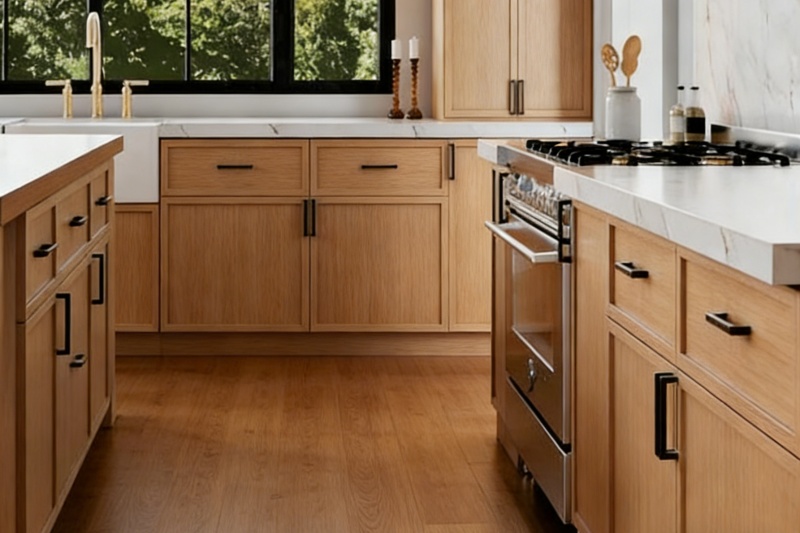
The most universally compatible finish for modern cabinetry. Matte black has minimal reflection and reads as clean linear detailing rather than a metallic tone. It creates crisp contrast against nearly every wood tone, from light oak to dark walnut, making it one of the best-looking hardware choices for wood cabinets. It also unifies mixed wood schemes, such as light upper cabinets paired with dark lower cabinets.
2. Brass & Gold (Brushed, Satin, Unlacquered)
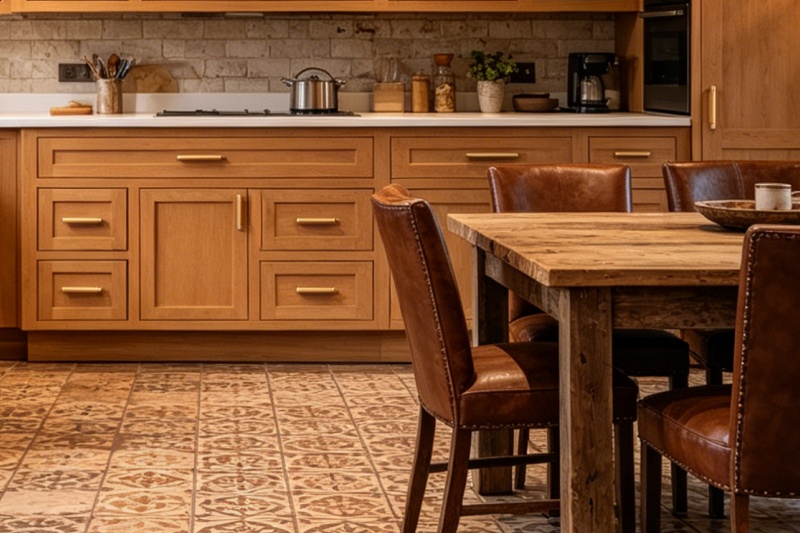
Brass is a highly popular warm metal. Designers tend to specify brushed brass and unlacquered brass instead of harsh bright polished gold. Unlacquered brass patinas and darkens over time; this transformation is celebrated as character rather than wear on cabinetry. It pairs exceptionally well with dark walnut, cherry and gray-washed oak. Warm gold on dark natural wood is a classic combination frequently featured in high-end homes.
3. Chrome & Polished Nickel
High-gloss, cool-toned metals. Chrome dominated the 1990s and early 2000s and has gradually given way to softer brushed alternatives. It still works well in modern, mid-century kitchens and bathroom spaces, delivering sharp mirror-like reflections. It complements light natural wood cabinets as well as solid painted cabinets in white or gray. It coordinates seamlessly with matching chrome faucets in bathrooms.
4. Brushed Nickel / Satin Nickel / Stainless Steel
A safe, foolproof neutral option. Brushed nickel is low-reflective silver-gray, compatible with most wood tones and coordinating with most bathroom faucet finishes. It is the preferred selection for multi-family and commercial projects, with very low risk of misalignment. It works with both light and dark woods; for warm woods like cherry, brushed nickel is far gentler than stark bright silver.
5. Oil-Rubbed Bronze & Black Bronze
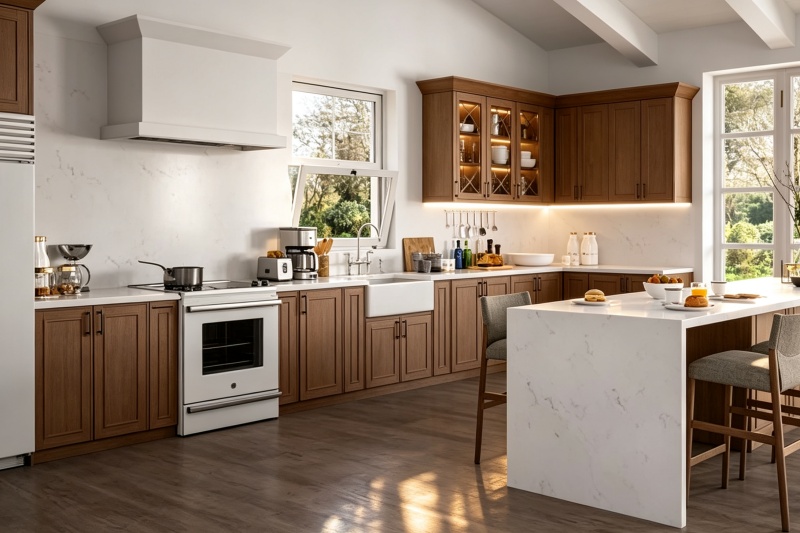
A warm dark brown-black finish with faint copper undertones. Once synonymous with traditional Tuscan kitchens, updated formulations now suit modern farmhouse and vintage interiors. Deeper than black iron with an underlying warmth, it pairs beautifully with medium warm wood, blending gently with reddish-brown wood bases and offering softer contrast than solid black.
Best Pairings of Wood Cabinets and Hardware Finishes
| Wood Tone | Matte Black | Brass / Gold | Brushed Nickel | Oil-Rubbed Bronze | Chrome |
| Light Natural Oak | Preferred | Works | Works | Use Caution | Works |
| Medium Warm Wood (Cherry / Hickory) | Works | Works | Works | Preferred | Use Caution |
| Dark Walnut / Coffee Wood | Works | Preferred | Use Caution | Works | Use Caution |
| Gray-Washed / Weathered Oak | Preferred | Works | Preferred | Use Caution | Works |
| Painted White Wood | Preferred | Preferred | Works | Works | Works |
Select Hardware Finish by Design Style
While matching hardware to wood tone is essential, cabinet door profile further narrows your optimal hardware choices:
Recommended hardware: Matte black, brushed stainless steel, polished chrome, slim brushed brass.
Flat-panel minimalism prioritizes clean lines. Light gray and white flat cabinets paired with slim black bar pulls are the modern kitchen standard. Brass adds warmth to cool-toned spaces; stick to thin straight bar pulls and avoid ornate ring-style hardware.
Recommended hardware: Matte black, oil-rubbed bronze, unlacquered brass. Cup pulls and half-moon pulls are iconic selections.
White Shaker cabinets with black cup pulls have been one of the most popular kitchen combinations for the past decade. For knotty oak and natural wood warm farmhouse schemes, oil-rubbed bronze softens harsh contrast. Brass paired with white Shaker leans toward refined English countryside styling.
Recommended hardware: Oil-rubbed bronze, polished brass, antique brass, polished nickel.
Traditional door profiles carry substantial presence, so hardware needs matching heft. Base pulls and drop pulls are ideal. Bright polished brass is a timeless traditional pick; oil-rubbed bronze offers a more relaxed, muted look.
Surrounding Finishes Matter Too
Hardware should not be judged in isolation against cabinet doors. It must harmonize with all surrounding finishes to build a cohesive kitchen atmosphere.
Light cool-toned quartz and marble: Pair with brushed nickel, chrome or matte black; brass is an alternative if warmth is desired.
Warm-veined granite: Oil-rubbed bronze and brushed brass echo the stone’s base tones.
Solid wood slab countertops: Hardware must contrast against both cabinet wood and countertop wood. When both are warm wood, black or nickel creates separation. If their hues are close, brass or bronze maintains tonal unity.
If tile incorporates metallic accents (brass tile, stainless mosaic, copper round tile), match hardware to the metal family rather than replicating the exact finish. Perfectly identical metal finishes can feel forced; matching texture yields a more sophisticated result.
A standard rule for designers: Match cabinet hardware finish to faucet finish. Brushed nickel faucets with brushed nickel pulls; black faucets with black pulls. Mixing multiple metals in compact bathrooms quickly creates discord. Kitchens allow more flexibility — black hardware can work with stainless sinks — yet faucets and hardware should ideally share the same thermal quality (warm or cool).
Pendant lights and sconces form a secondary metallic layer. Brass pendants plus black hardware can work with white cabinets and gray-washed wood. Brass lighting, black hardware and chrome faucets together, however, create clashing three-metal combinations. Limit the whole home to one primary metal finish plus one accent metal, distributed across hardware, lighting and faucets.
Common Costly Mistakes to Avoid
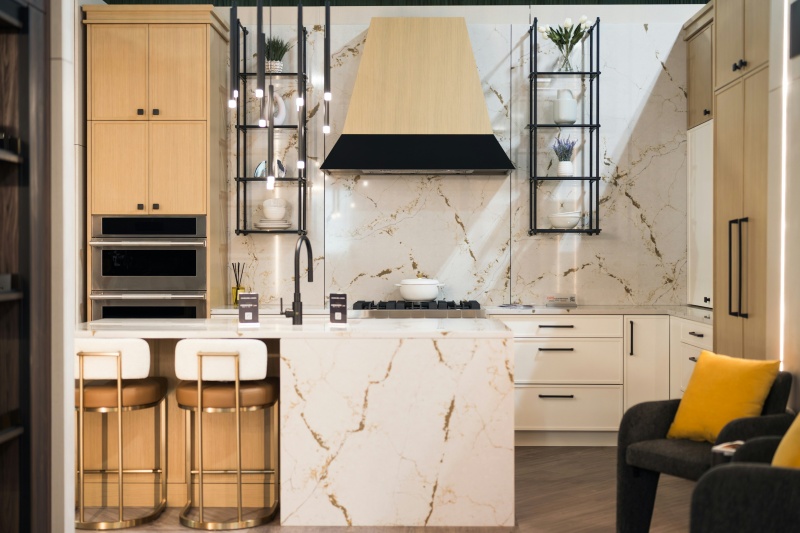
1. Hardware finish nearly identical to wood base tone: Brown pulls on brown cabinet doors disappear visually. Hardware needs clear contrast, either lighter or darker.
2. Bright polished brass on medium warm wood: Shiny gold paired with amber cherry wood can look dated. Choose brushed or unlacquered brass instead.
3. Chrome hardware with cherry or hickory: Cool silver amplifies red undertones in the wood and can make the timber look pinkish. Brushed nickel or oil-rubbed bronze is far softer.
4. Three or more distinct metal finishes in one space: Black, brass and chrome together almost always read chaotic. Select one primary metal and at most one accent metal.
5. Ignoring the patina timeline: Unlacquered brass darkens and develops patina over 6–12 months. For stable long-term color, opt for clear-coated brushed brass.
Closing Thoughts
Hardware may seem like minor detail, yet it is touched every single day in the kitchen. It outlasts most paint trends; countertops may be replaced while hardware remains. It is also one of the first details visitors notice when entering the room. Polished chrome, brushed nickel, brushed oil-rubbed bronze and matte black hardware are among the most flattering choices for wood cabinetry.
At Union Woods, hardware for our full RTA lineup — including premium inset, Shaker and flat-panel collections — is pre-drilled to fit BLUM, DTC and JUSEN hardware systems. We offer core finishes: matte black, brushed brass, brushed nickel and oil-rubbed bronze. For commercial project clients confirming bulk orders, we can ship pre-production door and hardware finish samples for side-by-side approval before manufacturing commences.


 Hoja informativa
 English

 IPv6 RED SOPORTADA